

How to Plan a Visit to the Pumpkin Patch for Toddlers
Anyone who has taken a three year old to a farm knows the shape of the day. The first hour is magic. The second hour is still pretty good. And then somewhere around hour three, somebody is crying, somebody is carrying a sleeping toddler, and somebody has lost a shoe.
It does not have to go that way. A trip to the pumpkin patch with toddlers goes beautifully when you plan around how little kids actually work, instead of trying to see everything.
We watch thousands of families come through our farm every fall, and the ones who have the best day are almost never the ones who did the most.
So here is what we have learned, from the people who are out there in it every weekend.
Arriving Early
If you take one thing from this guide, make it this. The first two hours after opening are the best two hours of the day when you have small kids.
Lines are short. The animals are alert and interested. The light is gorgeous for photos. Parking is close, which matters enormously when you are hauling a stroller, a diaper bag, and eventually a pumpkin. And most importantly, your kids are at their best, which is a resource that runs out and does not come back.
Weekday visits, if your schedule allows it, are quieter still. But an early Saturday beats a midday Saturday by a mile.
Pro Tip: Plan for three good hours, not a full day. Leave while everyone is still happy and asking to stay longer. That is the visit your kids will remember and the one that makes them beg to come back next year. Pushing to hour five to “get your money’s worth” is how a great day turns into a rough one.
What Works at Each Age
Here is something that surprises new parents. The big, exciting attractions are often not the hit with the youngest kids. What wins is usually simple and hands-on, something they can control themselves, and what that looks like changes a lot between a one year old and a five year old.

Under two, the farm is mostly a day of looking and touching. Animals are bottomless entertainment at this age, which is why Animal Land and the giraffe barn are always packed with strollers. Add a wagon ride and a pumpkin bigger than they are, plan the visit around the nap, and treat anything else as a bonus.

Two and three is the ideal age of the corn box, a giant sandbox filled with corn kernels instead of sand. It is also the right age for Tumbleweed Junction, our new kid-sized western tiny town.
Little ones can play, pretend, shop and explore their way from Goebbert’s General Store to the Prairie Dog Pet Clinic. It is built to their size, so nobody has to be lifted, steered or talked into anything.
We have watched two year olds stay in there for forty-five minutes straight while the rest of the farm waits. Short, loud, funny things like the pig races land well at this age too.

Four to six is when kids start wanting to run the day. They love anything they can climb or bounce on, so the jumping pillow is usually first on the list, and gem mining makes a good calm stop because they get something to carry home in a pocket. The Kidstruction Zone is a good one for this age too, with mini excavators and cranes to dig, dump and scoop with. The corn maze is still better saved for older kids, since tired four year old legs tend to give out long before the exit.
The full lineup for this season lives on our attractions page. Pick two or three things that suit your kids before you arrive, rather than trying to fit in everything once you are there.
Build a Route Instead of Wandering
A little structure prevents a lot of backtracking, and backtracking with small children is where days go to die. Here is the shape that works for most families.

Start with the Closest Big Attraction
Park, walk in, and do it first while everyone is fresh and the lines are still short.

Do the High-Energy Things Next
Jumping, running, climbing, and bouncing all belong early, while they still have the fuel for it.

Eat Before Anyone Is Hungry, Then Go Calm
A hungry small child is already a late-stage problem, and after food is the time for animals, gem mining, the corn box, Tumbleweed Junction, or a wagon ride, not the jumping pillow.

Finish with Pumpkins and a Treat
Pick pumpkins on the way out so you are not carrying them all afternoon, then end with something sweet on the walk to the car.
That last step is quietly the most important one. How the visit ends is what everybody remembers about it.
What to Pack for a Farm Day
Farms are outdoor, dusty, uneven places, and September weather in Illinois cannot make up its mind. A 48 degree morning turning into a 76 degree afternoon is completely normal.
- Closed-toe shoes that you do not care about. Not sandals, not brand new sneakers.
- Layers. A jacket in the morning that lives in the wagon by noon.
- A wagon or a sturdy stroller with real wheels. Small plastic wheels and farm gravel do not get along.
- Wipes and hand sanitizer. You will use more than you expect, especially around the animals.
- Water bottles, since kids get thirsty long before they think to say so.
- A change of clothes in the car. Not for the farm. For the ride home. Trust us on this one.
Pro Tip: Take a photo of your kids on your phone the moment you arrive, before you walk in. If you ever get separated in a crowd, you will have an exact, current picture of what they are wearing to show staff. It takes two seconds and every parent who has ever needed it is glad they did it.

Food Without the Meltdown
Food is not just fuel on a farm day, it is a rest stop. Sitting down together for fifteen minutes resets everyone, and it is the difference between a second wind and a total collapse.
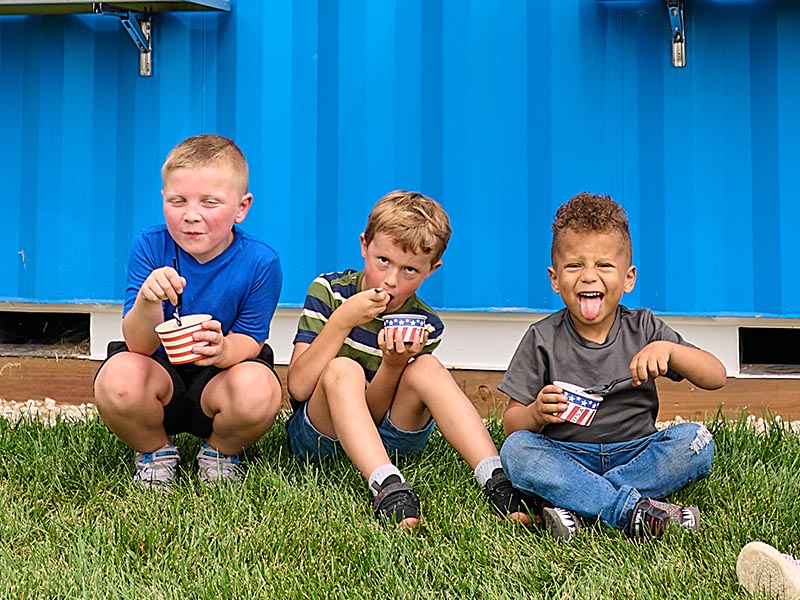
Our advice is to eat earlier than feels necessary. Around here you can grab roasted corn or kettle corn to eat on the move between attractions, or sit down for something more substantial before you take on the bigger stuff. Then leave ice cream and the sweets for the very end, as the closer.
Sweet treats are a great motivator, too. “Two more animals and then we get ice cream” is a negotiating position that has never once failed a parent.
Know What Might Be Too Much
Every farm has a few attractions built for bigger kids, and the haunted house is the classic example. Some six year olds love it. Some ten year olds absolutely do not. You know your kid better than any sign does.
Same with anything loud, dark, or fast. If you are unsure, walk past it first and watch the faces of the kids coming out. That tells you more than any description will.
And it is completely fine to skip things. A farm day with a toddler is not a checklist. Nobody is grading you, and your four year old will not know or care that there was a whole other section of the farm.
Planning Questions, Answered
What is the best age for a first pumpkin patch visit? Honestly, every age works, but the sweet spot for pure wonder is about three to eight. Under three, keep the visit short and lean on the animals and the corn box. Over eight, the maze and the bigger attractions carry the day.
How long should we plan to stay with toddlers? Two to three hours is plenty. Anything past that is usually parents getting their money’s worth at the expense of everybody’s mood.
Should we bring a stroller or a wagon? A wagon, if you have one. It hauls kids, jackets, snacks, and pumpkins, and it handles farm ground far better than a light umbrella stroller.
What if the weather looks iffy? Dress for it and come anyway. Overcast days are often the best ones, because the crowds thin out and the light is soft. Just check ahead if there is real rain in the forecast, since some attractions are weather dependent.
We Will See You Out Here
Fall goes by fast in Northern Illinois. There are only so many good Saturdays between the first cool morning and the first hard freeze, and kids grow out of this stuff quicker than anyone warns you.
Taking a toddler to the pumpkin patch does not have to be complicated. Come early, do less than you planned, eat before anyone is starving, and head home while everybody still likes each other.
Families from South Barrington, Barrington, Schaumburg, Arlington Heights, Hoffman Estates, Inverness, and Algonquin have been making this a September tradition for years. Check our Fall Festival page for this season’s hours, tickets, and attraction lineup, then come make a morning of it. We will have the corn box filled, Tumbleweed Junction open and the wagons running.
Questions? Talk to Goebbert’s
We would rather answer a question now than fix a problem later.


